Posts
Posts


I've been harbouring a lingering grudge against the A Vogel Institute for quite some time.
 (Image credit - witty comment is mine)
Earlier this year I complained to the ASA about some preposterous claims the company were making for a couple of their flagship products.
The complaint was rejected because each of the claims were appended by the words
"...based exclusively on use as a traditional medicine..."
Despite my disgust, I felt sure that one day I'd get my revenge.
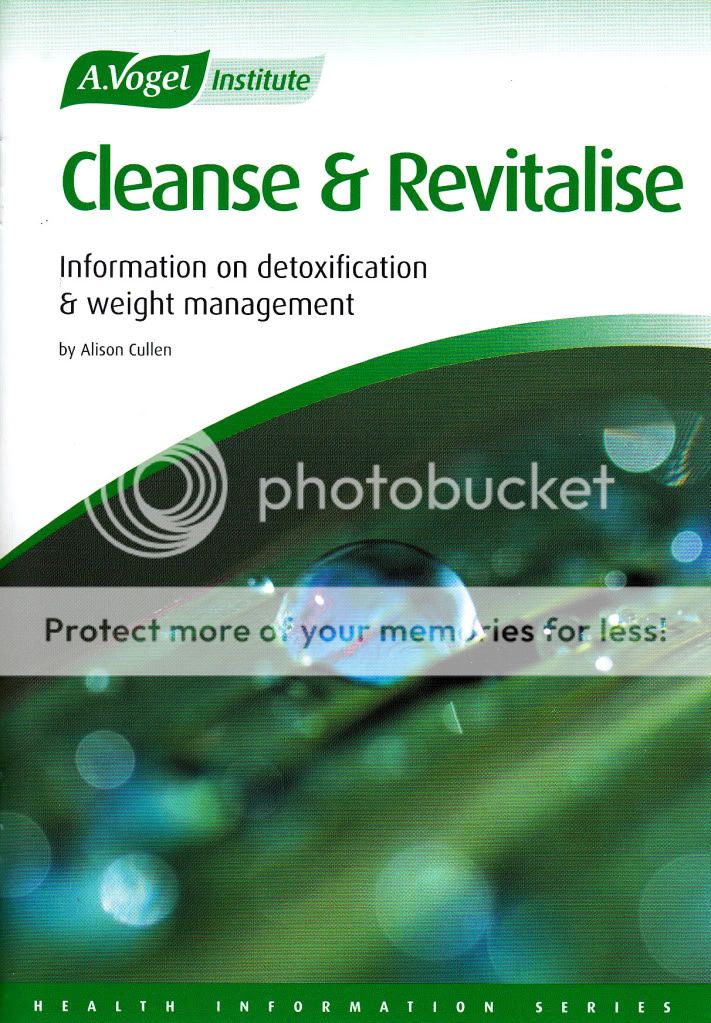
Today I spotted a series of wacky statements in the company's "Cleanse & Revitalise" booklet (available here, here and here).
I also noticed some dodgy research which had been cherry-picked from a wider, more negative pool of clinical studies and duly inserted into another booklet, "Prostrate Health" (available here, here and here).
Both of the adverts are now sitting in the ASA's in-tray. (It's rather odd that no-one at the company spotted the glaring errors, but I suppose that's what comes from accumulating so much bad karma.)

"I write to complain about a booklet I picked up at the CamExpo exhibition in London on 24th October this year.
The flyer, for A. Vogel, promotes a number of "detox" products.
I suspect that the booklet may be in breach of the British Code of Advertising, Sales Promotion and Direct Marketing (CAP Code). I can provide the original booklet by post, if necessary.
1. The booklet is titled:
"Cleanse & Revitalise - Information on detoxification & weight management - Health Information Series"
2. The UK's leading authority on complementary medicine, Professor Edzard Ernst, has recently written about "detox" treatments [1]:
"Detox, as used in alternative medicine, is based on ill-conceived ideas about human physiology, metabolism, toxicology etc. There is no evidence that it does any good and some treatments...can be harmful. The only substance that is being removed from a patient is usually money."
3. (i) The section "Here's what to do about it" starts on p5, and reads
"When attempting to clean up, it is vital to open the exit routes first. This is so that toxins lifted from the tissues and the organs will actually leave the body rather than circulate in the bloodstream (making you feel terrible) before settling back in again. Fasting on organic seaweed...won't help your body to cleanse unless you've got those exit routes open and are encouraging a plentiful emptying of toxins into the outside world."
(ii) In response to this problem, the booklet suggests a number of the advertisers products.
(iii) "Linoforce is an extremely effective remedy for constipation, certain to get your bowels moving again with no delay..."
(iv) "Urinary tract: Drinking...water...will really help reduce fluid retention, allowing toxins to leave through the urinary tract rather than get trapped in the body. Golden Rod Tea [an A Vogel product] is good for this too..."
(v) "User Milk Thistle Complex to cleanse your liver and improve the way it metabolises both toxins and fats...So with Milk Thistle Complex you can give your liver a proper overhaul, leaving it better equipped to deal with toxins and fats."
(vi) "Solidago Complex will cleanse and support your kidneys, helping them to deal with toxins and keep your fluid [sic] balanced properly"
(vii) "...pay some attention to your lymphatic system...with a dose of Calendula Complex"
(viii) Under Section 12.1, I challenge whether any of these claims can be substantiated.
4. Under Section 3.1, I challenge whether the claim in the section "What should I eat whilst detoxifying?" that the named foods should be eaten in order to detoxify the body is misleading.
5. Under Section 3.1, I challenge whether the claim in the section "Will my skin improve with all this detoxifying?" that "Doing regular detoxing of your liver and kidneys to keep toxicity levels down" is misleading.
6. Under Section 12.1, I challenge whether the claim that the "Viola tricolor" product can "[increase] the flow of nutrients to the skin and the removal of wastes from the skin, as well as reducing inflammation in the skin cells" can be substantiated.
7. (i) The section "How will detoxifying help my metabolism?" promotes more of the advertiser's products.
(ii) "Taking Linoforce will move things along nicely [in your bowel]"
(iii) "Restoring the balance of friendly bacteria in your gut...Do this by drinking a couple of glasses of Molkosan Vitality every day...It provides the kind of environment that friendly bacteria like and is also very good for your pancreas."
(iv) "Milk Thistle Complex to improve liver function will have a beneficial knock-on effect on weight control."
(v) "Improving kidney function with Solidago Complex...can do wonders for your weight..."
(vi) Under Section 12.1, I challenge whether any of these claims can be substantiated.
8. (i) More products are promoted in on p10.
(ii) "Helix Slim improves the way your body extracts the energy from carbohydrates, keeping your blood sugar on an even keel...the one to use if you are a sugar addict and find dieting makes you famished..."
(iii) "[The advertiser's] Kelp [Tablets]...ha[ve] the ability to bind toxins such as heavy metals and carry them out of the body. This detoxifying effect is also energising."
(iv) "Craving Essence" is good for people who feel "unhappy or stressed" and thus "eat badly"
(v) Under Section 12.1, I challenge whether any of these claims can be substantiated.
9. (i) The "A Vogel Detox Box" is prominently promoted on p11.
(ii) Under Section 12.1, I challenge whether the product label description, clearly visible in the photo, that the product is a "10 day toxin elimination programme" can be substantiated, and under Section 3.1 I challenge whether it is misleading.
10. I confirm I have no connections with the advertiser. I confirm I am not involved in legal proceedings with the advertiser."

"I write to complain about a booklet picked up at the CamExpo exhibition in London on 24th October this year.
The booklet, for A. Vogel, promotes Saw Palmetto as a treatment for an enlarged prostrate gland. The advertisers have a number of Saw Palmetto products in their product range.
I suspect that the booklet may be in breach of the British Code of Advertising, Sales Promotion and Direct Marketing (CAP Code). I can provide the original booklet by post, if necessary.
1. (i) The booklet makes the following claim for Saw Palmetto, an extract from the fruits of the palm "Serenoa repens":
"Research has now shown that Saw Palmetto extract provides mild to moderate improvement in urinary symptoms for men with an enlarged prostrate gland. Saw palmetto extracts have been shown to reduce inflammatory activity within the prostrate..."
(ii) (Benign prostatic hyperplasia is the medical term for an enlarge prostrate gland.)
2. The claim is presumably referring to a 2002 study, "Serenoa repens for benign prostatic hyperplasia" [1], whose conclusions were:
"The evidence suggests that Serenoa repens provides mild to moderate improvement in urinary symptoms and flow measures. Serenoa repens produced similar improvement in urinary symptoms and flow compared to finasteride and is associated with fewer adverse treatment events. The long-term effectiveness, safety and ability to prevent BPH complications are not known. The results of this update are in agreement with our initial review.
3. However, other more recent studies do not demonstrate any effect beyond placebo.
4. (i) A 2006 study, "Saw Palmetto for Benign Prostatic Hyperplasia" [2], found the following result:
"There was no significant difference between the saw palmetto and placebo groups...during the one-year study. The incidence of side effects was similar in the two groups."
(ii) The study's conclusion was:
"In this study, saw palmetto did not improve symptoms or objective measures of benign prostatic hyperplasia."
5. A 2008 review, "Phytotherapy for Lower Urinary Tract Symptoms Secondary to Benign Prostatic Hyperplasia" [3], investigated a number of plant extracts, among them saw palmetto. The review concluded:
"Most clinical trials of investigating the efficacy of botanicals suffer from well documented methodological flaws. Saw palmetto has been clearly shown as comparable to placebo in a trial of sound methodology. While preliminary results appear promising, to our knowledge the remaining botanicals have yet to be evaluated in a trial of similar quality."
6. (i) The booklet seems to claim that saw palmetto's effects are supported by moderate quality evidence, yet there is no mention of more recent studies that each conclude the effects of saw palmetto are indistinguishable from placebo.
(ii) Therefore under Section 3.1 of the CAP Code (2010), I challenge whether the claim is misleading.
7. I confirm I have no connections with the advertiser. I confirm I am not involved in legal proceedings with the advertiser.
Footnotes:
[1] Wilt T, Ishani A, Mac Donald R (2002). "Serenoa repens for benign prostatic hyperplasia". Cochrane Database Syst Rev (3): CD001423. doi:10.1002/14651858.CD001423. PMID 12137626.
[2] Bent S, Kane C, Shinohara K, et al (February 2006). "Saw palmetto for benign prostatic hyperplasia". N. Engl. J. Med. 354 (6): 557–66. doi:10.1056/NEJMoa053085. PMID 16467543.
[3] Dedhia RC, McVary KT (June 2008). "Phytotherapy for lower urinary tract symptoms secondary to benign prostatic hyperplasia". J. Urol. 179 (6): 2119–25. doi:10.1016/j.juro.2008.01.094. PMID 18423748.
"